You Won’t Believe This Dinner Under the Stars in Kaş, Turkey
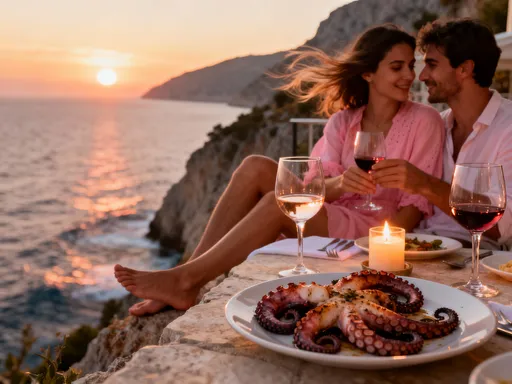
Picture this: barefoot on a cliffside terrace, the Mediterranean breeze in your hair, and a plate of smoky grilled octopus in front of you as the sun melts into the sea. That’s dinner in Kaş, Turkey—where every meal feels like a secret shared between friends. I didn’t just eat here; I experienced food in a whole new way. It’s not just about what’s on the plate, but where you are, who you’re with, and how the moment makes you feel. The air carries the scent of wild herbs and salt, the light turns golden, and time seems to pause just long enough for you to savor it. In Kaş, dining isn’t a routine—it’s a ritual, a celebration of place and presence.
Arrival in Kaş: First Impressions That Stick
The first glimpse of Kaş unfolds like a postcard painted with care—rows of whitewashed houses cascade down a steep hillside, their blue doors and shutters contrasting against the rugged limestone cliffs. Perched on the southern coast of Turkey’s Teke Peninsula, this quiet town overlooks the shimmering Mediterranean, where boats bob gently in the harbor below. As you step onto the narrow cobbled streets, worn smooth by decades of footsteps, you notice the silence—no honking horns, no rush, just the distant chime of goat bells and the soft murmur of Turkish spoken in doorways. There’s a stillness here that feels rare, almost sacred.
What sets Kaş apart from more commercialized coastal towns is its authenticity. There are no sprawling resorts or neon signs, only family-run guesthouses, small art galleries, and local shops selling handwoven baskets and olive oil soap. The scent of oregano drifts from open windows, mingling with the briny tang of the sea. Even the pace of walking changes—you slow down, not out of necessity, but because the atmosphere invites it. This isn’t a place you pass through; it’s one you settle into, allowing its rhythms to reshape your own.
For visitors, this shift is subtle but profound. The moment you arrive, you stop being a tourist and begin to feel like a traveler—one who’s stumbled upon something genuine. That transformation starts long before dinner; it begins with the first breath of sea air, the first smile from a shopkeeper, the first time you pause to watch the light shift over the water. And it prepares you, without you even realizing it, for the kind of dining experience that doesn’t just feed the body, but nourishes the soul.
The Rhythm of Local Life: How Time Slows Down
In Kaş, time doesn’t march—it meanders. The day begins early, not with alarms, but with the quiet activity of fishermen hauling in their nets along the harbor. By sunrise, the morning’s catch—glistening sea bass, silvery sardines, and sometimes octopus—is laid out on ice at the waterfront, where chefs from nearby tavernas inspect it with practiced eyes. This is the heartbeat of the town: fresh, seasonal, and deeply connected to the sea.
By mid-morning, the small market comes alive. Vendors arrange pyramids of ripe figs, baskets of wild capers, and wheels of creamy goat cheese wrapped in fig leaves. Olives in every shade—green, black, brined with citrus or herbs—are displayed in wooden barrels. Elderly women in floral scarves haggle gently over prices, while children dart between stalls with sticky fingers from freshly sliced watermelon. There’s no rush, no pressure to move quickly. Conversations unfold slowly, punctuated by laughter and long pauses. This unhurried rhythm isn’t laziness—it’s a way of life rooted in presence and connection.
Meals reflect this tempo. Lunch doesn’t start at noon; it begins when everyone is ready, often stretching into the early afternoon. Dinner? That’s not even considered until after 8 p.m., and it rarely ends before midnight. A single meal might include a dozen small dishes—meze—arriving one by one, encouraging conversation, sipping wine, and savoring each flavor. The food isn’t the only thing being consumed; so is time, shared with loved ones or newfound friends.
This cultural rhythm is essential to understanding Kaş’s culinary identity. When food is prepared slowly, eaten slowly, and enjoyed in good company, it becomes more than sustenance—it becomes memory. Visitors who adapt to this pace don’t just taste the food; they feel it, absorb it, carry it with them long after they leave. To eat in Kaş is to participate in a tradition where time is not spent, but honored.
From Sea to Table: The Heart of Kaş’s Cuisine
The essence of Kaş’s cuisine lies in its simplicity and its reverence for fresh, local ingredients. Here, the sea isn’t just a backdrop—it’s the main ingredient. Every morning, fishermen return with nets full of the day’s catch, and within hours, those fish are on dinner plates. There’s no need for elaborate sauces or complex techniques; the natural flavors are too vibrant to mask. A fillet of sea bass might be grilled over olive wood, brushed with lemon and thyme, then served with nothing more than a drizzle of golden local olive oil. That’s the philosophy: let the ingredient speak.
At waterfront tavernas, the kitchens are open, and the chefs work with quiet confidence. You’ll see octopus marinated in red wine vinegar, then grilled until tender with a smoky char. Squid is stuffed with rice, pine nuts, and currants, then baked in parchment paper to seal in moisture and aroma. The preparation is humble, but the results are unforgettable. Even the way the food is served—on chipped ceramic plates, with forks that don’t quite match—adds to the authenticity. There’s no pretense, only pride in doing things the right way.
Beyond seafood, the land contributes just as generously. Farmers from the surrounding hills bring in artichokes, zucchini, and tomatoes so ripe they burst with flavor. Wild herbs like dill, mint, and fennel grow freely and are used liberally in salads, stews, and dips. One of the most beloved combinations is a simple plate of sliced tomatoes, cucumbers, and onions, tossed with oregano and drenched in olive oil—a dish so basic, yet so perfect, it becomes a revelation.
This farm-and-fisher-to-table approach isn’t a trend in Kaş; it’s tradition. There are no imported ingredients out of season, no frozen substitutes. What you eat depends on what the sea and soil have provided that day. And that dependence on nature fosters a deep respect for the environment, the seasons, and the people who work the land and sea. When you dine in Kaş, you’re not just eating well—you’re eating with intention.
Hidden Tavernas: Where Authenticity Lives
Some of the best meals in Kaş aren’t found in guidebooks or on Instagram. They’re tucked away in narrow alleyways, up steep stone steps, or behind unmarked wooden doors. These are the family-run tavernas where the menu is written on a chalkboard in Turkish, the tables are close enough to hear neighboring conversations, and the owner greets you like an old friend. There’s no Wi-Fi, no English-speaking staff, and definitely no online reservations. But there is warmth, generosity, and food that tastes like it’s been made for someone they love.
One such place is a tiny restaurant perched on a rocky outcrop just outside the main town. You reach it by foot, following a path lined with bougainvillea and jasmine. Inside, the space is simple: a few wooden tables, a view of the sea, and a kitchen so small it looks like it could fit in a closet. The owner, a woman in her sixties with sun-weathered hands, cooks everything herself—grilled vegetables, slow-cooked beans, and a stew of fish heads and tomatoes that might sound unappetizing but tastes like the ocean itself. She doesn’t take orders; she brings what she’s made, and you eat it with gratitude.
Another favorite is a harbor-side meze house where fishermen still gather after their shifts. The menu changes daily, depending on what was caught and what’s ripe. You might be served fried mussels on a bed of lemon-dressed greens, or a cold dish of sea beans with yogurt and garlic. The owner, a man with a thick mustache and a ready laugh, will pour you a glass of rakı if you’re staying late, then tell stories about storms at sea and weddings on the beach. There’s no pressure to leave, no check dropped at your table. The evening unfolds at its own pace.
These hidden spots thrive on word of mouth, not marketing. They don’t need flashy signs or English menus because their reputation is built on consistency, honesty, and heart. Dining in such places isn’t just about taste—it’s about trust. You’re not a customer; you’re a guest. And in that shift, you experience something rare: a meal that feels personal, intimate, and deeply human.
Dining with a View: When Location Becomes Part of the Meal
In Kaş, the setting is not just a backdrop—it’s an ingredient. Some of the most memorable meals happen on cliffside terraces where the only sound is the distant crash of waves and the clink of wine glasses. Others unfold on rooftop gardens draped in ivy, where jasmine scents the air and stars begin to appear as the sky deepens from blue to indigo. The view doesn’t distract from the food; it enhances it, creating a sensory harmony that lingers in memory long after the last bite.
One evening, I dined at a terrace restaurant carved into the side of a cliff, accessible only by a narrow staircase lit with lanterns. The table was close to the edge, and as I sat barefoot on the stone floor, I could feel the coolness of the rock beneath my feet. The sun was setting, painting the sky in streaks of orange, pink, and gold, while the sea below turned molten. A plate of grilled octopus arrived, tender and smoky, accompanied by a salad of tomatoes, cucumbers, and wild greens. With each bite, the flavors seemed to deepen, as if the beauty around me was amplifying the taste.
As darkness fell, candles were lit, and the stars emerged—one by one, then by the thousands. The Milky Way stretched across the sky like a river of light. The wine, a local red from the nearby hills, was smooth and earthy. The conversation flowed easily, punctuated by laughter and long silences filled only by the sound of the sea. In that moment, the meal wasn’t just about hunger or even flavor. It was about connection—to the place, to the people, to the universe itself.
Such experiences are not accidental. In Kaş, dining is designed to be immersive. Whether you’re on a seaside dock, a hillside patio, or a quiet garden behind an old stone wall, the location is chosen to elevate the moment. The air, the light, the sounds—they all become part of the experience. And when you leave, you don’t just remember what you ate. You remember how you felt.
Flavors That Tell Stories: Signature Dishes Worth Trying
Every dish in Kaş carries a story, passed down through generations, shaped by the land, the sea, and the hands that prepare it. To eat here is to taste history, tradition, and the quiet pride of people who know how to honor their ingredients. Among the most cherished dishes is barbunya pilaki, a humble yet exquisite preparation of butter beans simmered in a rich tomato sauce with carrots, onions, and a hint of cinnamon. Served cold, it’s often part of a meze spread, its creamy texture and sweet-savory flavor a perfect complement to grilled fish or rakı.
Another standout is deniz börülcesi, or sea beans—succulent, salty greens harvested from the rocky coastline. They’re typically served raw or lightly blanched, dressed with lemon juice, olive oil, and sometimes a touch of garlic. The taste is briny and bright, like the sea itself, and eating them feels like a direct connection to the Mediterranean. Locals believe they’re good for digestion and vitality, and while science may not confirm that, the experience of eating them—crisp, refreshing, alive—makes the claim feel true.
For seafood lovers, lakerda is a must-try. This is cured bonito, aged and pressed, then sliced paper-thin and served with onions and lemon. The texture is firm yet buttery, the flavor deep and umami-rich. It’s often enjoyed as an appetizer with a glass of rakı, the anise-flavored spirit that turns milky when water is added. The ritual of preparing and sharing lakerda is as important as the taste—it’s a dish meant for slow enjoyment, for conversation, for savoring.
Then there are the simple pleasures: warm pita bread dipped in tahini and honey, fried mussels stuffed with rice and herbs, or a bowl of thick yogurt topped with crushed walnuts and a drizzle of pomegranate syrup. These dishes may not be famous beyond the region, but they are beloved by those who know them. And when you sit down to eat them, especially when shared with locals who explain their significance, you don’t just taste food. You taste culture.
How to Eat Like You Belong: Tips for an Immersive Experience
To truly experience dining in Kaş, it helps to let go of rigid plans and embrace the local way. Start by arriving late—dinner is not a rush-hour event here. Locals rarely sit down before 8:30 or 9 p.m., and the best tables are often filled only after 10. Don’t be in a hurry. Let the day unfold, take a swim, wander the streets, and let your appetite build naturally.
If you’re unsure what to order, look around. Pointing at what another table is eating is not rude—it’s practical, and often appreciated. Many small tavernas don’t have English menus, but the staff will patiently guide you, sometimes bringing small tastes of dishes to help you decide. Learn a few Turkish phrases—“Teşekkür ederim” (thank you), “Lütfen” (please), “Bu ne?” (What is this?)—and you’ll be rewarded with smiles and extra hospitality.
Embrace the meze culture. Instead of ordering one main dish, start with a selection of small plates—grilled vegetables, hummus, stuffed grape leaves, cold salads, and marinated fish. Let them arrive slowly, enjoy them with bread and wine, and let the meal stretch over hours. This is not about filling your stomach; it’s about enjoying the company and the moment.
And finally, be open. Say yes to the house wine, accept the extra dish the chef sends out “just because,” stay for dessert even if you’re full. Let the evening unfold without an agenda. In Kaş, the best experiences aren’t planned—they’re discovered. When you eat like you belong, you’re not just a visitor. You’re part of the story.
Dining in Kaş isn’t just about satisfying hunger—it’s about feeding the soul. It’s where landscape, culture, and cuisine merge into moments you carry long after the last bite. To eat here is to belong, even if just for one starlit night.