You Gotta See These Hidden Viewpoints Driving Through Pokhara
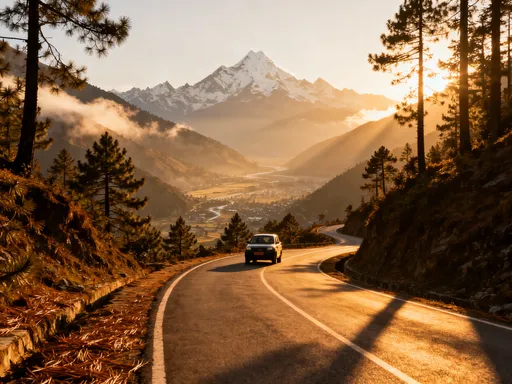
Driving through Pokhara, Nepal, I stumbled upon viewpoints that took my breath away—literally. Away from the crowds, these spots offer untouched Himalayan panoramas, serene lakes, and quiet mountain trails. Self-driving gave me freedom to explore at my own pace, turning every bend into a surprise. If you’re chasing raw beauty and real moments, this journey is a must. Let me show you why.
Why Self-Driving in Pokhara Changes Everything
Traveling through Pokhara by car transforms the experience from a checklist of tourist stops into a personal journey of discovery. Unlike rigid itineraries imposed by group tours or the limitations of public transport, having your own vehicle allows for spontaneity, comfort, and access to places most visitors never reach. The freedom to stop on a whim—whether for a misty mountain clearing, a roadside tea stall with an incredible view, or a quiet lakeside path—makes all the difference in how deeply you connect with the landscape.
The road network around Pokhara is surprisingly accessible, with well-paved main routes connecting the city center to major attractions like Sarangkot and Phewa Lake. Beyond these, however, lie a series of smaller, less-maintained roads that lead to secluded ridges, rural villages, and elevated lookouts with uninterrupted Himalayan vistas. While some stretches can be narrow, steep, or lightly potholed, they are generally navigable with a standard compact SUV or hatchback, especially during the dry season from October to May. Four-wheel drive is rarely necessary unless venturing into more remote hillside trails.
Renting a car in Pokhara is straightforward, with several reputable local agencies offering vehicles for daily or weekly hire. Many include GPS navigation systems or can help install offline maps before departure. Drivers should carry a valid international driving permit along with their home license, as this is required by Nepali law. It’s also wise to choose a rental that includes roadside assistance, as mobile connectivity can be spotty in higher elevations.
Traffic in Pokhara is relatively light compared to larger South Asian cities, but the mix of motorbikes, rickshaws, and pedestrians means staying alert is essential. Horn usage is common and not aggressive—it's a way of announcing presence around blind corners. Driving on the left is standard, and speed limits are posted but not strictly enforced; responsible driving is encouraged for safety and respect toward local communities. Fuel stations are available within the city and at key junctions, though it’s best to refill before heading up mountain roads where services are sparse.
For travelers seeking both convenience and intimacy with nature, self-driving offers unmatched advantages. You control the timing, the route, and the rhythm of your journey. Want to wake before dawn and catch the first light hitting Annapurna? You can. Prefer a late afternoon picnic at a quiet lakefront clearing? No schedule to answer to. This level of autonomy turns a simple sightseeing trip into a soulful exploration of one of Nepal’s most beautiful regions.
Sarangkot: The Classic Sunrise Powerhouse
No visit to Pokhara feels complete without witnessing sunrise from Sarangkot, a hilltop viewpoint perched at over 1,500 meters above sea level. But experiencing it by car adds a unique dimension—the gradual ascent through winding roads, the cool pre-dawn air rolling in through open windows, and the anticipation building with every hairpin turn. As the sky begins to lighten, the silhouette of the Annapurna and Dhaulagiri ranges emerges like ancient sentinels against the fading stars.
Arriving early—ideally between 5:00 and 5:30 a.m., depending on the season—ensures a good parking spot and time to walk the short path to the main viewing platform. From there, the panorama is nothing short of majestic. On clear mornings, the first golden rays strike the snow-capped peaks, setting them ablaze in hues of pink and orange. Below, a sea of clouds often blankets the Pokhara Valley, making the mountains appear to float in midair. It’s a sight that stays with you long after you’ve returned to city life.
While Sarangkot is popular, arriving by car allows you to avoid crowded shuttle buses and gives you the flexibility to leave before the mid-morning tourist rush. Many visitors linger only for sunrise, so departing shortly after gives you a quieter drive back and opens up the rest of the day for lesser-known destinations. For those who wish to stay longer, small cafes near the top serve hot tea, coffee, and simple breakfast items like toast and eggs, prepared fresh over wood-fired stoves.
To make the most of your visit, dress warmly—temperatures can drop below 10°C even in the dry season. Bring a flashlight or use your phone’s light for the final stretch of the path if it’s still dark. A lightweight tripod is useful for capturing long-exposure shots of the sunrise without blur. And while the main platform draws the largest crowds, walking just a few meters off to the side reveals quieter vantage points with equally stunning views and far fewer people.
Driving to Sarangkot also means you can combine the stop with other nearby attractions, such as the Gurung Museum or a detour to the village of Kaskikot, where traditional stone houses and terraced fields offer a glimpse into rural life. The journey itself becomes part of the experience, each curve revealing new perspectives on the valley below.
The Hidden Gem: Australian Camp and Its Secret Vistas
Along the northern shore of Phewa Lake lies a peaceful enclave known as Australian Camp, a name rooted in history when foreign trekkers once gathered here during the 1970s. Today, it remains a haven for those seeking tranquility away from the busier southern shores. Accessible via a scenic drive from Lakeside, the route follows a tree-lined road that gradually reveals glimpses of the water through the foliage. The final stretch is unpaved but manageable for most vehicles, especially in dry weather.
What makes Australian Camp special isn’t just its lakeside serenity, but its role as a gateway to several under-the-radar viewpoints. A short walk from the parking area leads to elevated clearings where the full sweep of Phewa Lake unfolds, framed by forested hills and distant peaks. At dawn or dusk, the water reflects the changing sky in shimmering gradients of gold, purple, and deep blue. It’s common to see local monks walking in meditation along the shore or fishermen casting wide nets in traditional style—a quiet rhythm of life that feels untouched by time.
One of the best-kept secrets near Australian Camp is a narrow footpath that climbs gently up the adjacent ridge. After about 15 minutes of walking, it opens onto a grassy knoll with a panoramic view of both the lake and the Annapurna range. Because it’s not marked on most maps, few tourists find it. Those who do are rewarded with solitude and photo opportunities that feel authentic and unposed. The climb is easy enough for all ages, and the soft breeze at the top makes it an ideal spot for a quiet moment or a small picnic.
Visitors are encouraged to respect the natural environment by carrying out all trash and avoiding loud noises. There are no formal facilities at the viewpoint, so bringing water, snacks, and a light jacket is advisable. Since mobile signal can be weak, downloading offline maps beforehand ensures you won’t get disoriented on the return path. Local guides are sometimes available near the entrance to the trail and can enrich the experience with stories about the area’s history and ecology.
Timing your visit for late afternoon allows you to witness the sun dipping behind the western hills, casting long shadows across the lake. As the light softens, the atmosphere becomes deeply calming—a perfect moment to pause and absorb the beauty of the place. For many, this quiet corner of Pokhara becomes a highlight not because of grandeur, but because of its gentle, grounding presence.
Drive to Bindhyabasini Temple for Culture and Clarity
Just a ten-minute drive from central Pokhara, the Bindhyabasini Temple sits atop a small hill overlooking the city and offering one of the most comprehensive views of the surrounding landscape. More than just a religious site, it serves as a cultural anchor and a vantage point where spirituality and scenery converge. The drive there passes through bustling market streets, where vendors sell marigolds, incense, and fresh fruit—giving travelers a vivid sense of everyday Nepali life.
Dedicated to the goddess Bhagwati, an incarnation of Durga, the temple is an active place of worship where locals come to offer prayers and seek blessings. The air is filled with the scent of burning juniper and the sound of temple bells. Red prayer flags flutter in the wind, carrying mantras into the sky. Visitors are welcome to observe respectfully, though non-Hindus are generally not permitted inside the main sanctum. Photography is allowed in the courtyard and surrounding areas, provided it is done discreetly and without disrupting rituals.
What many travelers don’t expect is the commanding view from the temple grounds. From its elevated position, you can see Phewa Lake stretching to the north, the Annapurna range rising in the distance, and the intricate patchwork of rooftops and streets below. It’s especially striking at sunset, when the fading light bathes the valley in warm tones. Benches and shaded rest areas make it easy to sit and absorb both the spiritual energy and the visual splendor.
Parking near the temple is limited but available, with attendants guiding vehicles into compact spaces. It’s best to arrive early in the morning or later in the afternoon to avoid the midday heat and crowds. A small entry fee may apply for non-worshippers, which helps maintain the site. Modest clothing is required—shoulders and knees should be covered—and shoes must be removed before stepping onto the temple platform.
This stop adds depth to any driving itinerary, blending cultural appreciation with natural beauty. It reminds travelers that in Nepal, the sacred and the scenic are often inseparable. Taking a few moments to learn about the significance of the temple—from local guides or informational signs—enriches the experience far beyond a simple photo opportunity.
Beyond the Lake: Discovering Pumdikot and the Shiva Statue
Ahead of the more traveled paths lies Pumdikot, a serene ridge located about 6 kilometers northwest of Pokhara’s city center. The drive there is steeper and quieter, winding through lush greenery and small farming settlements. Fewer tourists make the journey, which means the atmosphere is peaceful, almost meditative. At the summit stands a towering white statue of Lord Shiva, over 130 feet tall, gazing eastward across the valley with a calm, eternal presence.
Completed in 2010, the Shiva statue has become a symbol of peace and spiritual strength. Visitors can walk around its base along a well-maintained circular path lined with prayer wheels and flowering shrubs. The real magic, however, lies in the 360-degree views from the surrounding ridge. To the north, the Annapurna range dominates the horizon. To the south, Phewa Lake sparkles like a mirror. On clear days, you can even see parts of the Dhaulagiri massif in the far west.
Because the site is still relatively unknown to mass tourism, it offers a rare sense of solitude. Early risers are rewarded with mist rising from the valley and the soft glow of sunrise illuminating the statue’s face. Late afternoon brings golden light and fewer visitors, making it an ideal time for photography. There are basic restrooms and a small café serving tea and snacks, but it’s wise to bring water and any essentials, especially if planning to hike the nearby trails.
The road to Pumdikot is paved but narrow in places, requiring careful driving, particularly when meeting oncoming traffic. A compact car with decent clearance handles the route well. There is a small parking area at the top, and local attendants are usually present to assist. While the statue is the focal point, the true value of the visit lies in the stillness of the place—the chance to stand above the world for a moment and simply breathe.
Roadside Surprises: How Detours Create Unplanned Magic
Some of the most memorable moments on the road come not from planned stops, but from spontaneous decisions. A wave from a farmer tending his field, a sudden break in the clouds revealing a peak bathed in sunlight, or a tiny roadside tea stall with a view worth a thousand photos—these unplanned encounters often become the heart of a journey. Self-driving through Pokhara makes such moments possible, rewarding curiosity and patience.
One morning, I pulled over to adjust my map and found myself in a small village where children waved and called out “Namaste!” in unison. An elderly woman offered me a cup of homemade milk tea from her porch, smiling as I fumbled with Nepali pleasantries. Another time, a light rain cleared just as I reached a high bend, unveiling a rainbow arcing over Phewa Lake. I hadn’t even known the spot had a view—until the sky decided to show off.
These experiences underscore the value of slowing down. Keeping a camera or phone ready ensures you don’t miss fleeting beauty. Packing snacks, water, and a light rain jacket prepares you for unexpected delays or invitations to rest. Offline maps like Maps.me or OsmAnd are invaluable, but don’t hesitate to ask locals for directions—they’re often eager to help and may point you toward hidden trails or viewpoints not found on any app.
The joy of self-driving is not just in reaching destinations, but in embracing the journey itself. Every detour holds potential. A closed gate might lead to a footpath with a stunning overlook. A dirt road might end at a quiet orchard where the owner shares fresh fruit. These moments aren’t just additions to the trip—they are the trip.
Wrapping Up: Why the Drive Itself Is the Destination
The true essence of traveling through Pokhara by car isn’t measured in kilometers covered or viewpoints checked off, but in the quality of attention given to each moment. It’s in the hush before sunrise as you park on a ridge, the crunch of gravel underfoot as you step toward a view, the warmth of tea shared with a stranger on a quiet road. Self-driving allows for a deeper connection—to the land, to the rhythm of the hills, and to oneself.
This kind of travel invites mindfulness. It asks you to be present, to notice the way light changes on a mountain face, to listen to the wind through rhododendron trees, to feel the shift in air temperature as you climb. It rewards patience and openness, offering beauty not as a spectacle, but as a quiet revelation.
For women travelers, particularly those in the 30–55 age group, this journey offers a rare blend of independence, safety, and emotional resonance. The roads are manageable, the people welcoming, and the pace entirely your own. Whether traveling solo, with a partner, or with family, the experience fosters confidence and connection.
So if you’re planning a trip to Nepal, consider taking the wheel. Seek out the quiet vistas, the hidden paths, the moments no one told you about. Let the mountains speak in their slow, ancient language. And remember—sometimes, the best views aren’t found on a map. They’re discovered when you decide to keep driving just a little farther, around one more bend, toward the light.