Lost in the Clouds: Baguio’s Landmarks That Stole My Heart
Nestled in the cool highlands of the Philippines, Baguio isn’t just a city—it’s a living postcard. As I wandered its misty streets, I wasn’t just sightseeing; I was stepping into stories carved in stone and timber. From colonial-era buildings to cultural icons, each landmark felt like a quiet whisper of history. The air carried the scent of pine and memory, and every turn revealed facades softened by time yet strengthened by purpose. This isn’t just about architecture—it’s about connection, memory, and the unexpected beauty of urban exploration. In a country known for beaches and tropical heat, Baguio stands apart, offering a cooler climate and a calmer rhythm, where history isn’t displayed behind glass but lives in the streets, parks, and homes of everyday life.
The Highland Vibe: Why Baguio Feels Like No Other Philippine City
Baguio’s identity is inseparable from its elevation. Sitting more than 1,500 meters above sea level in the Cordillera mountain range, the city enjoys a temperate climate that feels more European than tropical. The average temperature ranges between 15°C and 23°C, a refreshing contrast to the humidity of Manila and other lowland cities. This coolness is not merely a comfort—it shaped the city’s very foundation. In the early 20th century, American colonial planners sought a hill station that could serve as a retreat from the sweltering heat, inspired by British hill stations in India. They found their answer in the Benguet highlands, where the air was crisp, the terrain undulating, and the forests dense with native pine trees.
Daniel Burnham, the renowned American architect and city planner, was commissioned to design Baguio’s master plan. His vision emphasized open spaces, wide avenues, and integration with nature—principles that still define the city today. Unlike the dense, chaotic growth seen in many Philippine urban centers, Baguio was deliberately laid out with breathing room. Parks were not afterthoughts but central features. The topography influenced building placement, with structures following the natural contours of the land rather than flattening them. This respect for the environment created a city that feels organic, not imposed.
The result was a unique urban experiment in the tropics: a city built not for commerce alone, but for well-being. The cooler climate allowed for different architectural styles—thicker walls, larger windows, and sloped roofs to handle occasional rains. Wood became a common material, giving buildings a warmth and texture absent in concrete-heavy cities. Even today, visitors notice the difference not just in temperature but in pace. Life in Baguio moves with a gentler rhythm, one shaped by mountain air and the legacy of thoughtful planning. This distinct atmosphere makes every landmark feel more intentional, every visit more reflective.
Burnham Park: Where the City Breathes
At the heart of Baguio lies Burnham Park, a sprawling 32-hectare green space named in honor of the city’s chief planner. More than just a park, it functions as the city’s communal living room—a place where families picnic, students study under trees, and couples stroll along paved paths. The park is divided into thematic zones: the children’s playground, the skating rink, the flower gardens, and the iconic man-made lake where visitors rent paddle boats shaped like swans and ducks. Yet its true value lies not in its amenities but in its enduring role as a public sanctuary.
Burnham envisioned Baguio as a city where nature and urban life coexisted harmoniously. His plan allocated generous space for parks and open areas, believing that access to greenery was essential to health and civic life. Burnham Park was the centerpiece of this philosophy. Unlike many urban parks that were added later as corrections to overcrowding, this one was foundational. It was designed to be inclusive—free to enter, centrally located, and easily accessible by foot or bicycle. This democratic spirit continues today, with no entry fee and no barriers to participation.
The park also frames the city’s architectural narrative. Its broad lawns offer unobstructed views of surrounding buildings, allowing visitors to appreciate the scale and style of nearby structures without visual clutter. The park’s lake, bordered by weeping willows and pine trees, reflects the skyline like a mirror, softening the urban edge. During festivals such as Panagbenga, the Flower Festival, Burnham Park becomes a canvas for cultural expression, filled with floral floats, street dancers, and local crafts. In this way, it remains not just a relic of colonial planning but a living, evolving space that adapts to the needs of the community.
Walking through Burnham Park, one senses the continuity of Burnham’s vision. Benches are occupied by elders reading newspapers, children chase each other across the grass, and vendors sell warm camote cue (roasted sweet potato) and bati-bati (a local corn-based drink). The air is filled with laughter and the occasional chime of a bike bell. There are no grand monuments here, yet the park itself is the monument—a testament to the power of simple, human-centered design. It reminds us that the most meaningful landmarks are not always the tallest or most ornate, but those that invite presence, rest, and connection.
The Mansion: Power, History, and Garden Gates
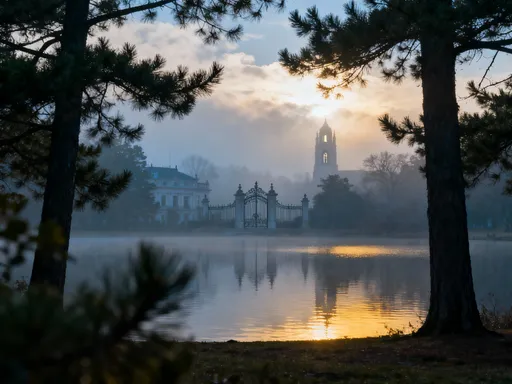
Rising behind iron gates on Mansion Circle is one of Baguio’s most photographed landmarks—The Mansion, the official summer residence of the President of the Philippines. Though the main building is typically closed to the public, its grand Neoclassical façade and meticulously maintained gardens draw visitors daily. The structure, originally built in 1908, has undergone several reconstructions, most notably after being destroyed during World War II. What stands today is a 1970s reconstruction that preserves the original style: white columns, symmetrical wings, and a central pediment that speaks of order and authority.
The Mansion’s history is intertwined with the nation’s political journey. During the American colonial period, it served as the summer home for the Governor-General. After independence, it was repurposed for the Philippine presidency, symbolizing the transfer of power from colonial rulers to national leaders. Presidents from Manuel L. Quezon to Ferdinand Marcos and beyond have spent time here, escaping the heat of Manila and conducting informal governance in a cooler, more contemplative setting. The surrounding gardens, filled with seasonal blooms and manicured hedges, were designed not only for beauty but for privacy and security.
Despite its restricted access, The Mansion holds a powerful symbolic presence. Locals and tourists alike line up at the gates to take photographs, treating the ironwork and stone pillars as a backdrop for memories. For many, it represents stability and continuity in a changing nation. The weekly flag-raising ceremony, held every Monday morning, draws small crowds who watch in quiet respect as the national anthem plays and the flag ascends. This ritual transforms the space from a seat of power into a site of civic engagement.
The surrounding area, known as Mansion Circle, functions as a green buffer zone, preserving the estate’s tranquility. Trees line the perimeter, and walking paths allow visitors to circle the property while enjoying views of the mountains beyond. Security is visible but not intrusive, maintaining a balance between accessibility and protection. The Mansion, therefore, is more than a building—it is a threshold between public and private, history and present, governance and community. Its enduring appeal lies not in opulence but in its quiet dignity, a reminder that leadership, like architecture, should be both strong and grounded.
Baguio Cathedral: A Tower Above the Mist
At the top of a gentle slope along Cathedral Hill stands the Baguio Cathedral, its tall bell tower piercing the frequent morning fog like a beacon. Officially known as the Cathedral of the Blessed Virgin of the Assumption, it is both a place of worship and a defining feature of the city’s skyline. Constructed in the 1920s and rebuilt after World War II, the cathedral showcases Romanesque Revival architecture with thick stone walls, rounded arches, and a prominent rose window. Its interior, cool and hushed, offers a sanctuary from the bustle of Session Road just below.
Visitors often remark on the sense of stillness inside. Sunlight filters through stained-glass windows depicting biblical scenes, casting colored patterns on the stone floor. The scent of incense lingers, and the sound of footsteps echoes softly. Masses are held regularly, attended by locals, tourists, and students from nearby schools. The cathedral is not a museum—it is a living church, where daily rituals connect the present to generations of faithful. Pilgrims come during feast days, and weddings are frequently held here, drawn by the serene atmosphere and panoramic views from the tower.
Climbing the narrow staircase to the bell tower rewards visitors with one of the best vantage points in the city. From this height, the urban fabric unfolds—clusters of buildings nestled among pine-covered hills, smoke rising from roadside grills, and the distant peaks of the Cordilleras fading into the horizon. On clear days, the view stretches for kilometers; on misty mornings, the city appears dreamlike, half-hidden in clouds. This duality—clarity and mystery—mirrors the cathedral’s role as both a physical and spiritual landmark.
The cathedral has also been a witness to history. It survived the bombings of 1945, though heavily damaged, and was rebuilt with community support. Its reconstruction symbolized resilience, a return to normalcy after devastation. Today, it continues to serve as a place of solace during times of national grief or personal struggle. Candles flicker in memory of loved ones, and prayer cards fill the intention boxes. The cathedral, therefore, is more than an architectural gem—it is a vessel of collective memory, a quiet guardian of the city’s soul.
BenCab Museum: Art Meets Architecture in the Hills
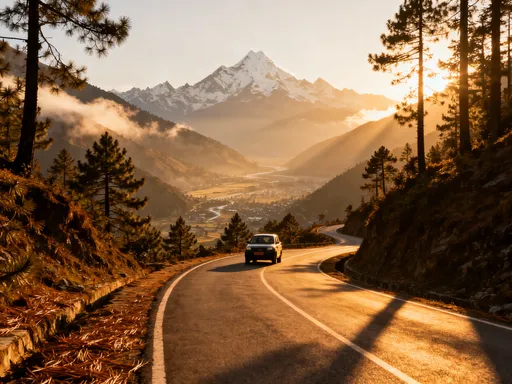
Perched on a mountainside about 10 kilometers from downtown Baguio, the BenCab Museum offers a journey that begins the moment you leave the city. The winding road climbs through pine forests and terraced gardens, each turn revealing a new perspective of the valley below. Designed by architect Francisco Mañosa, the museum blends modern design with indigenous Cordilleran elements, creating a structure that feels both contemporary and timeless. Its angled roofs, bamboo accents, and use of local stone allow it to emerge naturally from the landscape, as if grown rather than built.
Founded by National Artist Benedicto Reyes Cabrera, known as BenCab, the museum houses a personal collection of his works alongside rotating exhibitions of other Filipino artists. The permanent collection includes powerful pieces that explore identity, sensuality, and social themes, rendered in expressive brushwork and rich color. But the building itself is part of the exhibit. Natural light floods the galleries through skylights and open courtyards, changing the mood of the art throughout the day. Ventilation is passive, relying on cross breezes rather than air conditioning, reinforcing the harmony between art and environment.
Outside, the museum grounds extend into a cultural village that includes a traditional Ifugao house, a sculpture garden, and a café with a view. The “Bencab Garden” features stone carvings and installations that invite contemplation. A walking trail leads down to a rice terrace replica, connecting the art experience to the agricultural heritage of the region. The café, serving local coffee and organic dishes, allows visitors to linger, absorbing not just the art but the atmosphere.
What makes BenCab Museum exceptional is its holistic approach. It does not isolate art from life but integrates it with nature, culture, and daily experience. The journey up the mountain prepares the visitor mentally, shifting focus from urban distractions to creative reflection. The architecture supports this transition, with low thresholds, open spaces, and materials that echo the surrounding forest. For families, couples, and solo travelers alike, the museum offers more than a viewing—it offers a retreat, a chance to slow down and reconnect with beauty in its many forms. In a world of fast consumption, BenCab stands as a quiet rebellion, reminding us that art is not just to be seen but to be felt.
Session Road and Heritage Houses: Echoes of a Bygone Era
Once the commercial heart of Baguio, Session Road remains a vital artery, though its character has evolved over time. In the early 20th century, it was lined with low-rise buildings housing government offices, banks, and shops catering to American officials and local elites. Many of these structures featured wide verandas, louvered windows, and pitched roofs—designs suited to the highland climate. While modernization has replaced some of the old buildings with concrete structures, several heritage homes and pre-war facades still stand, quietly testifying to the city’s layered past.
Walking along Session Road today, one can spot remnants of colonial architecture tucked between newer establishments. Some have been repurposed: a former residence now houses a café, another serves as a boutique hotel. These adaptive reuse projects demonstrate how heritage can coexist with progress. The challenge, however, is real. Urban pressure, rising land values, and lack of strict preservation laws have led to the loss of several historic buildings. Each demolition erases a piece of the city’s visual memory, making the remaining structures even more precious.
Efforts to preserve Baguio’s architectural identity are ongoing. Local historians and civic groups advocate for heritage mapping and conservation incentives. Some buildings have been declared heritage sites by the National Historical Commission, offering them a degree of protection. Yet enforcement remains inconsistent. What is clear is that the character of Session Road depends not on grand monuments but on the cumulative effect of small, well-preserved details—the curve of a staircase, the pattern of a wrought-iron railing, the texture of aged wood.
Off the main road, quiet side streets reveal more intimate stories. Old family homes, some over a century old, stand behind gardens and stone walls. These private residences, often passed down through generations, embody continuity and resilience. They are not museums but lived-in spaces, where history is not curated but experienced daily. For visitors, exploring these areas offers a more personal connection to Baguio—one that goes beyond postcard views to touch the quiet dignity of ordinary preservation. In protecting these homes, the city protects not just bricks and mortar, but the values of stewardship, memory, and belonging.
Closing the Loop: Why These Stones and Stories Matter
The landmarks of Baguio are not frozen relics—they are active participants in the city’s identity. Each structure, park, and pathway carries the weight of history while serving present-day needs. To walk through Baguio is to engage in a dialogue with the past, not as a spectator but as a participant. The cool air, the scent of pine, the texture of aged stone—these are not just sensory details but threads in a larger narrative about place, memory, and continuity.
Burnham Park teaches us the value of open space in urban life. The Mansion reminds us of the dignity of public service. The Cathedral offers stillness in a noisy world. BenCab Museum shows how art and nature can coexist. And the heritage houses along Session Road whisper of resilience and care across generations. Together, these sites form a mosaic of meaning, each piece contributing to a deeper understanding of what it means to belong to a place.
For travelers, especially women in their 30s to 50s who seek meaningful experiences, Baguio offers more than scenery—it offers reflection. A visit here is not measured in photos taken but in moments of connection: the warmth of a shared bench in the park, the hush of a cathedral interior, the pride in seeing local art honored in a mountainside museum. These are the quiet triumphs of thoughtful design and collective memory.
As cities around the world struggle with rapid development and cultural erosion, Baguio stands as a gentle reminder that growth does not require erasure. Heritage and modernity can coexist when guided by respect, vision, and care. The stones of Baguio are not just structures—they are storytellers. And if we listen closely, they tell us stories of cool mornings, quiet courage, and the enduring beauty of a city that chose to build not just for today, but for tomorrow.